
Locally Owned & Operated
Mold Cleanup After Water Damage in Madison & St. Clair Counties
RCC Restoration provides mold remediation after water damage throughout Edwardsville, Collinsville, Glen Carbon, Troy, Maryville, Granite City, Belleville, O’Fallon, Fairview Heights, Columbia, Waterloo, and surrounding Metro East communities. Mold can begin developing after flooding, plumbing leaks, roof leaks, basement water, or hidden moisture if affected materials are not dried properly. Our team addresses both the mold issue and the moisture source to help reduce the risk of recurring growth. RCC Restoration provides water damage drying, mold cleanup, and restoration services throughout Madison County and St. Clair County. Addressing both moisture and mold helps create a more complete recovery after water damage rather than focusing only on visible growth.
If mold has developed after a leak or flood, call RCC Restoration at 618.406.5121 for professional remediation assistance.

Why Mold Develops After Water Damage
Water damage can create conditions that support mold growth when flooring, drywall, insulation, wood, and other materials remain damp. Flooding, plumbing leaks, roof leaks, basement water, and hidden moisture can affect areas beyond where visible water initially appears. Even after standing water is removed, moisture may remain beneath flooring, behind walls, or within other building materials if they are not adequately dried. These damp conditions can contribute to mold growth and additional property concerns. Addressing the moisture source and drying affected materials are therefore important parts of the remediation process. Professional water damage restoration can help address the underlying conditions associated with mold following a water loss.
If water damage has created mold concerns in your property, contact RCC Restoration at 618.406.5121 to discuss the appropriate next steps.

Signs Mold Is Growing After a Flood or Leak
Mold growth after water damage may be visible, but other warning signs can indicate that damp areas need further attention. Musty odors, discoloration, staining, recurring dampness, or visible growth on walls, ceilings, flooring, and other materials may indicate a mold problem. Areas surrounding previous leaks or flooding should also be monitored, particularly when materials remained wet or drying conditions were uncertain. Moisture may also persist in concealed areas, so the absence of obvious surface growth does not necessarily mean that all water-related concerns have been resolved. A professional mold inspection can help evaluate suspicious areas and identify moisture conditions that may be contributing to mold development after flooding or a leak.
If you notice musty odors, staining, or suspected mold after water damage, call RCC Restoration at 618.406.5121 for professional assistance.

Our Mold Remediation Process
Mold remediation after water damage begins by evaluating affected areas and the moisture conditions associated with the problem. RCC Restoration considers visible mold, water-damaged materials, and areas where moisture may remain before determining the appropriate remediation approach. Depending on conditions within the property, the process may involve containment, removal of mold-damaged materials when necessary, cleaning of affected areas, and moisture control. Drying may also be required when building materials remain wet from the original water loss. By addressing both mold contamination and the conditions that contributed to its development, remediation can become part of a broader recovery process that prepares affected areas for additional restoration when needed.
Begin addressing mold and moisture together by calling RCC Restoration at 618.406.5121 for professional remediation service.

Water Damage Drying & Moisture Control
Removing visible water does not necessarily mean that water-damaged materials are completely dry. Moisture can remain beneath flooring, behind drywall, above ceilings, or within insulation, framing, and other porous materials. When these areas stay damp, they can create conditions that contribute to mold growth and recurring moisture problems. Professional structural drying and moisture monitoring help address water remaining within affected materials after the initial loss. RCC Restoration combines water damage drying with mold cleanup when conditions require both services, helping address the relationship between unwanted moisture and mold development. The appropriate drying approach depends on where the water traveled, which materials were affected, and the conditions found within the property.
For professional drying and moisture control after water damage, contact RCC Restoration at 618.406.5121 to request service.

Preventing Mold After Water Damage
Reducing the risk of mold after water damage begins with controlling the water source and thoroughly addressing moisture within affected materials. Standing water should be removed, wet areas should be dried, and leaks or other sources of continuing water intrusion should be corrected as appropriate. Flooring, drywall, insulation, framing, and other materials may require additional attention when they have absorbed moisture. Property owners should also watch for recurring dampness, musty odors, staining, or visible growth after a flood or leak. When significant water damage occurs, professional water extraction, structural drying, and moisture monitoring can help address conditions that might otherwise remain unnoticed after visible water is gone.
If you are concerned about preventing mold after a water loss, call RCC Restoration at 618.406.5121 for drying and restoration assistance.

Insurance Claims Assistance
Mold following water damage may become part of an insurance claim depending on the cause of the original loss and the terms of the property owner’s policy. RCC Restoration provides insurance claim support and can help document affected areas and restoration-related work performed during the project. Property owners should report applicable water damage to their insurance carrier and speak directly with their insurer or adjuster about coverage, deductibles, limitations, and claim decisions. Documentation can help provide a clearer record of the original water damage, drying needs, mold-related conditions, and subsequent restoration work. Coverage for mold remediation and related services should always be confirmed directly with the insurance carrier because policies and circumstances can vary.
If mold remediation is connected to a water damage insurance claim, contact RCC Restoration at 618.406.5121 for restoration and documentation support.
Why Choose RCC Restoration
Mold that develops after water damage involves two closely related concerns: the mold itself and the moisture conditions that allowed it to grow. RCC Restoration provides mold remediation along with water damage drying, moisture control, mold cleanup, and related property restoration services throughout the Metro East. This allows affected areas to be considered as part of the broader water damage recovery process rather than treating visible mold as an isolated issue. Whether mold follows flooding, a plumbing leak, roof leak, basement water, or hidden moisture, RCC Restoration can evaluate affected conditions and determine what cleanup and restoration services are appropriate for homes and businesses throughout Madison County and St. Clair County.
When water damage leads to mold, turn to RCC Restoration at 618.406.5121 for coordinated remediation and restoration assistance.
Frequently Asked Questions
Mold after flooding or a leak can create questions about moisture, drying, cleanup, and what should happen next. Because each water loss affects materials differently, the appropriate response depends on where moisture traveled and the conditions found within the property.
Yes. Mold can develop when water-damaged materials remain damp long enough to create conditions that support growth. Prompt water removal and proper drying can help reduce the potential for mold development.
Mold may affect walls, ceilings, flooring, insulation, framing, basements, and other moisture-damaged areas. It can also develop in areas where moisture has become trapped and is not immediately visible.
Yes. Moisture can remain in concealed areas, including behind walls, beneath flooring, inside cabinets, or around other building materials. These hidden moisture conditions can allow mold to develop even when visible surfaces appear dry.
Not always. Materials may retain moisture after visible water is removed, particularly flooring, drywall, insulation, and other porous materials. Additional drying and moisture monitoring may be necessary to address remaining moisture.
Affected areas should be professionally evaluated to determine the appropriate approach. Depending on the conditions, this may include containment, mold cleanup, moisture control, removal of affected materials, and restoration of damaged areas.
Coverage depends on the policy and circumstances surrounding the original water loss. Some policies may provide coverage for mold resulting from a covered water event, while others may have limitations or exclusions. Contact your insurer or adjuster for specific information.
Have questions about mold following a leak or flood? Call RCC Restoration at 618.406.5121 to discuss your property with our team.
Areas We Serve
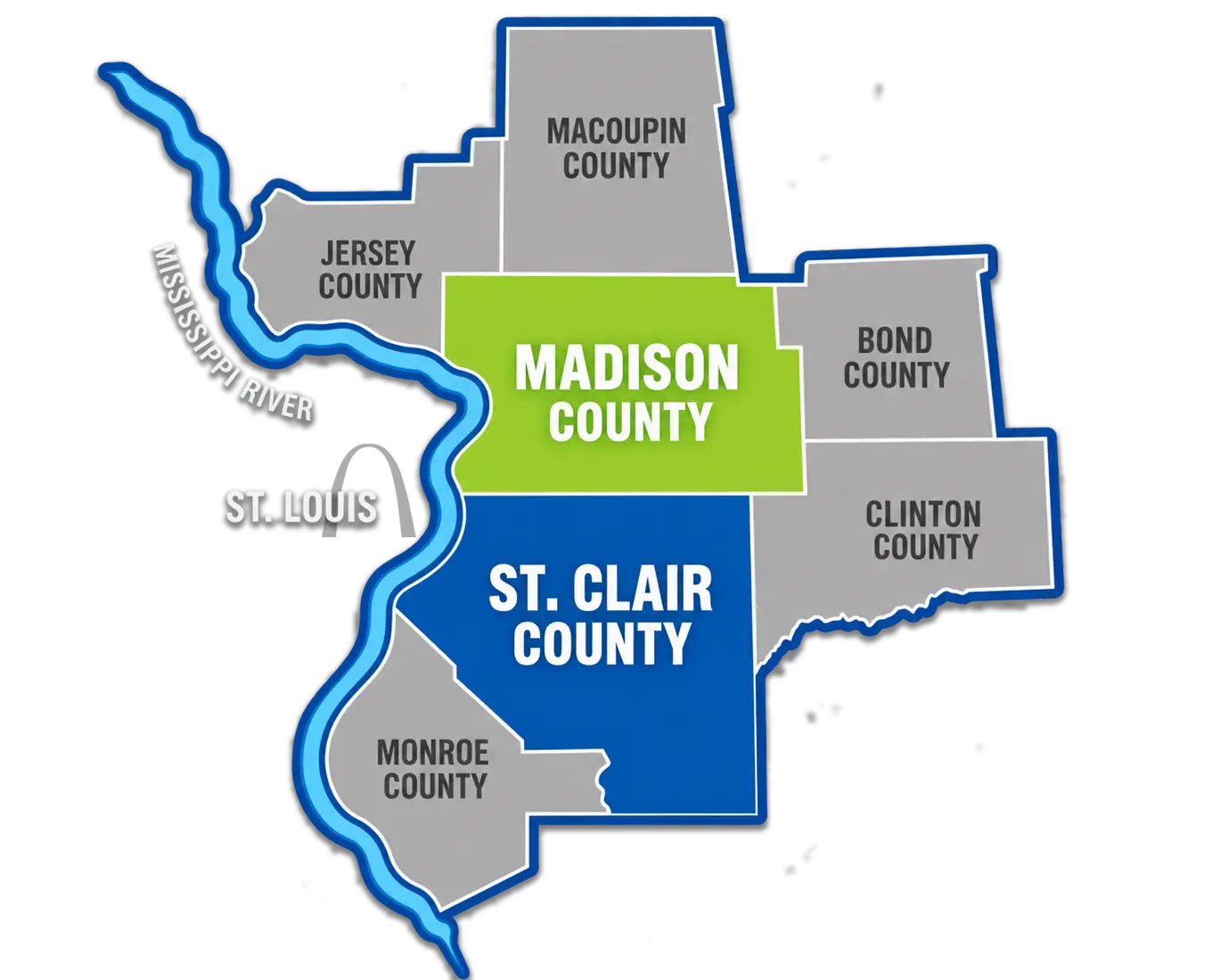
RCC Restoration provides mold remediation after water damage throughout Madison County, St. Clair County, and surrounding Metro East communities. Our team serves homeowners and businesses in Caseyville, Edwardsville, Fairmont City, Freeburg, Granite City, Hamel, O’Fallon, Pontoon Beach, Troy, and nearby Southern Illinois communities. Whether mold develops after basement flooding in Collinsville, a plumbing leak in Edwardsville, roof-related water intrusion in Belleville, or another moisture problem elsewhere in the Metro East, RCC Restoration provides mold cleanup, drying, moisture control, and related restoration services. Our team can address both the mold concern and water-damaged conditions when the property requires a coordinated recovery approach.
For mold remediation after water damage throughout our Metro East service area, call RCC Restoration at 618.406.5121 to request assistance.
Request Mold Remediation
Mold that develops after flooding, leaks, or other water damage should be addressed along with the moisture conditions contributing to the problem. RCC Restoration provides professional mold remediation, water damage drying, moisture control, cleanup, and related restoration services for homes and businesses throughout Madison County, St. Clair County, and surrounding Metro East communities. Whether your property experienced basement flooding, a plumbing leak, roof-related water intrusion, or hidden moisture, our team can evaluate affected areas and determine the appropriate remediation and drying approach. Addressing mold and moisture together helps create a more complete restoration process and can reduce conditions that contribute to recurring growth after the original water loss.
Request professional mold remediation after water damage. Call RCC Restoration at 618.406.5121 to get started.